
Here is something that surprises a lot of districts: your Medicaid reimbursementMedicaid Reimbursement The process of receiving payment from Medicaid for services provided to eligible students as part of a school-based program. for the whole year is mostly decided in September. Not because of anything you bill in the fall, but because of what is quietly in place, or missing, when the year begins.
Think of it like this. A speech session in the second week of school, delivered to a student who just transferred in and whose consent never carried over from their old district, is a service your district gave away for free. The money was owed to you. It just never gets recovered, because one small piece was missing when it mattered.
The reassuring part is that these gaps are predictable. They show up in the same handful of places every year, which means a little deliberate setup work now prevents a lot of lost funding later. This guide walks you through that setup, with parental consent as the piece that trips up the most districts. And with the updated federal claiming framework now the standard districts are measured against, getting it right this year matters a bit more than usual.
Why the First Weeks Decide Your Reimbursement Year
Every claim your district submits rests on a chain of four things: an eligible student, active consent, a credentialed provider, and documentation that matches a billable serviceBillable Service A health-related service provided to a Medicaid-eligible student that qualifies for reimbursement under Medicaid guidelines. Examples include therapy, nursing services, and certain assessments.Districts identify and submit these services for reimbursement through Medicaid billing software built for schools.. If any one of those is missing at the moment a service is delivered, that service usually cannot be billed later, even after you spot the problem.
That is why the opening weeks carry so much weight. Multiply one missed link across a full caseload and a whole staff of providers, and you can see how a slow September quietly shrinks a year of funding. The fix is not to work harder in the fall. It is to confirm the chain is solid before claims start flowing.
💡 Takeaway for school districts:
Reimbursement is won in the setup, not the submission. A service delivered before consent, eligibility, and provider records are confirmed is rarely billable after the fact. A little front-loading protects the whole year.
The Start-of-Year Readiness Checklist
Before your first claims go out, walk through this quick list and confirm each item is current:
- Parental consent is active and on file for every student you plan to bill for
- Student Medicaid eligibility is re-verified against your updated enrollment
- New providers are credentialed, added to your system, and trained to document
- Returning providers have refreshed their access and reviewed any workflow or policy changes
- Documentation standards match what is billable in your state
- Consent and eligibility records live somewhere your billing workflow can actually reference
The sections below dig into the ones that cause the most trouble.
Renewing School Medicaid Parental Consent
Consent is the most common reason a perfectly valid claim cannot be submitted, and it is also the easiest to overlook. A form signed last year feels like settled business. Under federal rules, it often is not.
A district cannot hand a student’s identifiable information to the Medicaid agency for billing without meeting the rules on parental consent to bill Medicaid under IDEA, and those rules come with specific content and notice requirements attached.
One helpful nuance to share with your team: you generally do not have to re-collect initial consent every single year for the same services. But you do have to send an annual written notification, and you need fresh consent when a student transfers into your district or when the type, amount, or cost of the billed services changes.
Confirming Provider and Documentation Readiness
Consent and eligibility get a student into the billable pool. Your providers are the ones who actually create the claims, so their readiness deserves just as much attention.
Onboarding New Service Providers with trainings
Ideally, a new therapist is documenting billable services correctly on day one, rather than a few weeks in when someone notices the notes are not quite claim-ready.
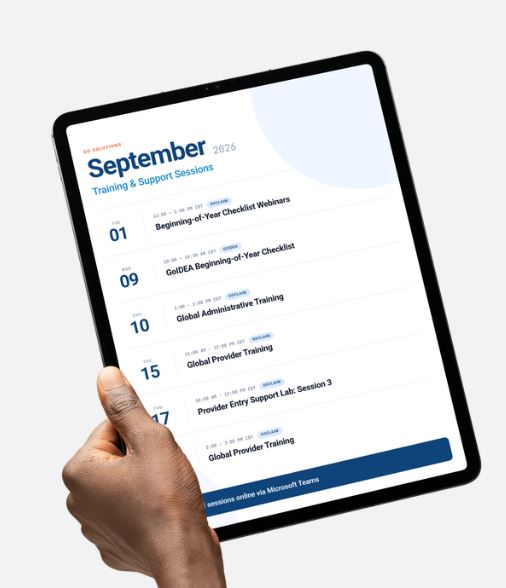
This is where your software vendor earns their keep. If they offer beginning-of-year training or webinars, get your new providers on those sessions.
They are just as valuable for your returning providers, who can use them to catch what changed in the software functionalities over the summer (where new software updates are usually released), especially including any workflow updates made for new policy.
If your Medicaid billing software vendor does not offer that kind of training, it is fair to ask them directly about one-on-one support. And if training simply is missing, that is worth keeping in mind when you weigh them against vendors who do include it. Good ongoing training is a big part of what separates a real partner from a plain software license.
💡 Recommended reading: Timing Matters in Special Education. Everything in the Right Place by the Right Time
💡 Recommended reading: Avoiding Common Medicaid Claim Denials
Don’t Leave Reimbursements on the Table
Here is what tends to be true: the districts that recover the most are the ones doing the least scrambling.
Their readiness is built into a connected workflow instead of scattered across spreadsheets and inboxes. That is exactly the problem GoClaim was built to solve, keeping consent, eligibility, documentation, and claim generation aligned in one place so the gaps that block reimbursement surface early, before they cost you.
If start-of-year readiness has always meant a stressful manual scramble for your team, this is a good year to change that.
Featured Product

Looking for a smarter way to handle school-based Medicaid billing?
GoClaim provides trusted tools and expert support tailored specifically for your school district — so you can simplify compliance, maximize reimbursements, and focus on student services.
Latest Posts