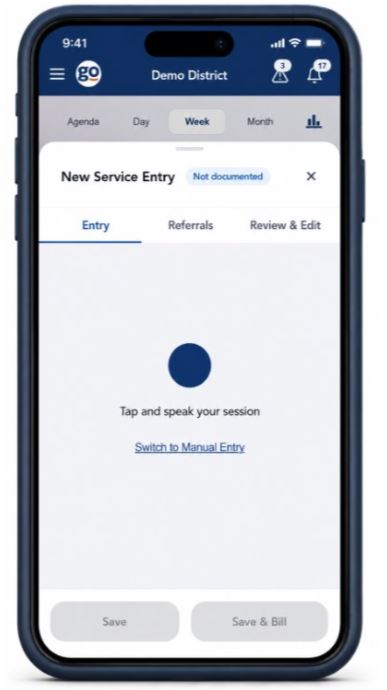
Great news! The much-anticipated voice input function is coming to GoClaim in 2026.
A speech-language pathologist wraps up a session, walks to the next room, and mentally files three observations she needs to write down later. By the end of the day she has seen a dozen students, and most of those notes are still in her head. So she writes them in the parking lot or taps them into her phone while walking between buildings.
This is the daily reality for many special education providers. The issue is not that providers dislike writing notes. It is that the school day rarely includes protected time to complete them. Sessions run back to back, hallways double as offices, and caseloads keep climbing.
When there is no gap in the schedule for documentation, the notes get pushed to whenever a spare moment appears. Sometimes the work spills into personal hours.
Why Timely Documentation Matters More Than It Seems
It is tempting to treat notes as paperwork that can wait. In special education, that delay carries real consequences.
Documentation is the evidence that a service happened, what it targeted, and how the student responded. It feeds progress monitoring, supports the record parents rely on, and underpins any claim a district submits for reimbursement. Federal rules require that each IEP describe how a child’s progress toward meeting the annual goals will be measured and reported to families on a set schedule. Notes written days late, from memory, make that reporting weaker and less defensible.
For districts that bill school-based Medicaid, the stakes extend to funding. Documentation of medical necessity and service delivery is a federal standard for reimbursement, spelled out in the Medicaid school-based services documentation requirements that guide what providers must capture for each encounter. Thin or delayed notes are one of the most common reasons clean services turn into denied claims.
What Is Voice-to-Text?
Voice-to-text, also called speech-to-text or dictation, is technology that converts spoken words into written text in real time. Instead of typing a note, the provider speaks it, and the software transcribes it into an editable document.
Modern systems handle natural speech, punctuation cues, and background noise easily, which makes them practical for the quick, on-the-move documentation that a school setting demands.
How Voice-to-Text Helps Close the Time Gap
The core benefit is simple: speaking a note is faster than typing one, and it can happen in moments that typing cannot fill. That speed changes when documentation gets done, not just how.
Capturing Notes in the Moment
Most people speak several times faster than they type, and speaking requires no desk or keyboard. A provider can dictate a session summary in the thirty seconds it takes to walk to the next room, while the details are still vivid.
Capturing notes this way protects accuracy in a way that end-of-day writing cannot. The provider is describing what just happened rather than reconstructing it hours later. Names, prompts, trial counts, and student responses land on the page while memory is fresh, which produces documentation that is both quicker to create and more reliable.
Shrinking the End-of-Day Backlog
When notes accumulate, they form a wall of documentation waiting at the end of the day. That wall is what pushes work into evenings and, dangerously, into commutes.
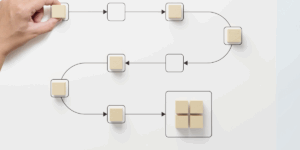
Voice-to-text lets providers chip away at documentation throughout the day instead of saving it all for later. A few dictated sentences after each session means fewer notes stacked up at dismissal. The following steps show how that rhythm typically works in practice:
💡 Takeaway for school districts:
Dictating immediately after a session captures detail at its most accurate. The value is not only speed; it is writing the note while the memory is still sharp, before the specifics fade.
Doing Voice-to-Text Well: Practical Considerations
Speech recognition is strong, but it is not flawless, especially with the specialized vocabulary common in special education. Student names, clinical acronyms, medication references, and goal terminology are exactly the words a general-purpose system is most likely to mishear. That makes a fast review step non-negotiable.
Providers should read back dictated text before finalizing it, with particular attention to:
- Proper names and student identifiers
- Acronyms and program-specific terms
- Numbers, such as trial counts, durations, or frequencies
- Anything that changes the clinical meaning of the note
💡 Recommended reading: Timing Matters in Special Education. Everything in the Right Place by the Right Time
💡 Recommended reading: Avoiding Common Medicaid Claim Denials
The Real Payoff: Time Back for the Work That Matters
Voice-to-text moves documentation into the small gaps that already exist in a provider’s day, captures detail while it is still accurate, and shrinks the end-of-day pile that could follow people home. Paired with a quick review habit and sensible privacy practices, it turns notes from a huge burden into smaller tasks that fits inside the working day.
That is the real return. Not just faster paperwork, but more of a provider’s energy pointed where it belongs: at the students in front of them, not the backlog behind them.
Featured Product

Looking for a smarter way to handle school-based Medicaid billing?
GoClaim provides trusted tools and expert support tailored specifically for your school district — so you can simplify compliance, maximize reimbursements, and focus on student services.

Looking for a simpler way to manage IEPs?
GoIDEA helps your staff save time with user-friendly tools, built-in compliance checks, and seamless integration with Medicaid billing — so you can write accurate IEPs faster and avoid duplicate data entry.
Latest Posts